







How Exciting Can U.S. Boarding School Science Be?

January 29, 2026

Paleontology, Boat Building, Crime Scene Investigation—At a Depth That Rivals College Courses

Why do so many families choose U.S. boarding schools?

Beyond rich extracurriculars and strong student support systems, the core attraction lies in the curriculum. Boarding school courses are not only rigorous, but genuinely inspiring—helping students build solid foundations while developing a true love of learning.

Today, FGE has curated a selection of standout Science courses at U.S. boarding schools. These classes approach college-level depth, feature imaginative project design, and are so compelling that the course titles alone spark curiosity.

If you are preparing to apply, we strongly recommend looking closely at specific school courses. Demonstrating a real understanding of—and interest in—a school’s curriculum in interviews or essays can be a decisive factor for admissions officers.


Phillips Exeter Academy


Biology Research

Imagine conducting research in collaboration with Stanford University—while still in high school.

Exeter’s Biology Research course offers students this rare opportunity. Through a partnership with Stanford research teams, students experience the full scientific research process. The collaborating lab (Dr. Kim’s Lab at Stanford) focuses on understanding the function and development of insulin-secreting cells, with the long-term goal of advancing treatments for Type I and Type II diabetes.

Students use fruit flies as a model organism, precisely regulating gene expression while identifying DNA regulatory regions. The course introduces modern fruit fly biology techniques, fluorescence microscopy, molecular biology, and bioinformatics—offering an authentic research experience rarely found at the secondary level.


Ornithology

A dream course for bird-watching enthusiasts—and far more than a hobby.

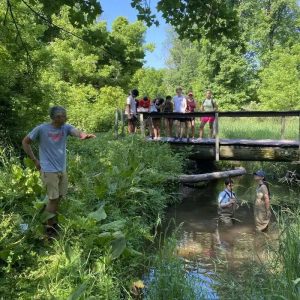
This specialized course trains students in field identification of local bird species and habitats, with a particular focus on spring migratory birds, as well as winter finches and waterfowl that may remain in the Exeter area.

Through a systematic scientific approach, students study bird life cycles, ecology, evolutionary patterns, and behavior, developing both observational skills and ecological literacy.


The Lawrenceville School


Forensic Science: Crime Scene Investigation & Evidence Analysis

This course introduces students to the field of forensic science, emphasizing careful observation and analytical investigation.

Students learn crime scene investigation techniques, evidence collection protocols, and documentation standards. They explore how trace evidence—such as hair, fibers, and fingerprints—plays a critical role in solving cases.

The course also examines landmark cases, including the O.J. Simpson trial, the JonBenét Ramsey case, and investigations involving Ted Bundy and Jeffrey Dahmer. Through these case studies, students analyze how forensic evidence and media coverage influence criminal investigations and judicial outcomes. Lawrenceville also offers related coursework in forensic chemistry, providing a comprehensive learning pathway.


Botany & Boat Building

What do plants and canoe construction have in common? Lawrenceville answers that question beautifully.

This interdisciplinary course introduces students to plant phylogeny and the identification of tree species traditionally used in canoe building. Students study the cultural history of canoe construction across different societies, including Indigenous traditions from the Pacific Northwest and Northeastern North America.

The course culminates in hands-on construction of a wood-frame canvas canoe, teaching core techniques such as steam-bending ribs, fitting planks, stretching canvas, and weaving seats—blending science, history, craftsmanship, and engineering.


Milton Academy


Observational Astronomy

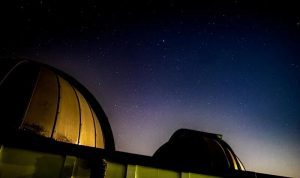
While many boarding schools offer astronomy, few have their own observatory. Milton does.

This course spans the full scope of astronomy—from stellar formation and cosmic evolution to solar system exploration and the history of astronomical discovery. Students conduct semester-long independent research projects, with past topics including variable star observation, sunspot tracking, Jupiter’s moons, and sunset azimuth measurements.

Weekly observation sessions take place at the Robert C. Ayer Observatory, using 9-inch and 12-inch fixed telescopes, portable instruments, and professional astronomical cameras for astrophotography.


Scientific Drawing and Illustration

Have you ever admired the precision and beauty of scientific illustrations?

This course teaches students how to observe nature closely and communicate scientific understanding visually. Through drawing and illustration, students strengthen their observational skills while learning to translate scientific phenomena into clear visual narratives.

The course aims to foster environmental responsibility and deepen students’ connection to the natural world. Student-led observation, sketching, and scientific journaling are central components of the curriculum.


The Webb Schools


Advanced Paleontology

Webb’s science curriculum draws heavily on one of its greatest assets: the Alf Museum of Paleontology.

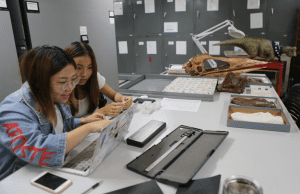
This honors-level museum research course allows students to conduct authentic fossil research alongside professional paleontologists. Students work directly with original specimens housed at the Alf Museum and learn how to design, execute, and present scientific research.

The course covers research methodology, scientific writing and peer review, data interpretation, and independent project design. Open to Grades 10 and 11, it also serves as a pathway to more advanced paleontology research courses.


Cate School


Coastal and Marine Ecology

When a school sits along the coast, the ocean becomes a classroom.

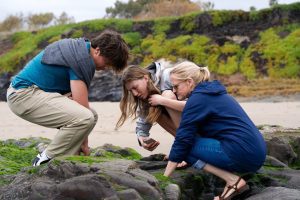
Cate’s Coastal and Marine Ecology course is a rigorous, college-level biology class that leverages the school’s coastal location. Designed for sophomores, the course includes extensive fieldwork and laboratory components.

Students study diverse ecosystems—from intertidal zones and kelp forests to coral reefs and deep-sea environments—while focusing on local coastal ecology. Through hands-on investigation, students develop a deep understanding of marine biodiversity and environmental sustainability.


The Taft School


Honors Ethnobotany

Ever wished you could take Herbology at Hogwarts?

At Taft, students can cultivate plants themselves through Honors Ethnobotany, a course developed in long-term collaboration with the New York Botanical Garden.

This interdisciplinary biology course explores the relationship between plants and humans at the intersection of history, food, culture, and agriculture. Students study plant and soil structures, plant compounds, and their biological and chemical properties—while engaging in hands-on cultivation and ethnobotanical projects.


Western Reserve Academy


Advanced Cancer Immunology

Western Reserve Academy is the only high school in the U.S. to offer advanced courses in cancer immunology and biotechnology.

Students learn foundational techniques such as prokaryotic and eukaryotic cell culture, advanced nucleic acid manipulation, protein purification workflows, and the proper use and maintenance of laboratory equipment. The curriculum progresses from fundamentals to advanced applications, providing an exceptional platform for students interested in biomedical research.


Foundation Global Education (FGE)

Focused on each child’s individuality
Tailored, long-term academic planning
Helping students earn offers from schools where they truly belong

To learn more about boarding school programs and course planning,
feel free to connect with us now!

Similar blogs

rover
School Selection

UK vs US Boarding Schools: Sports Preferences Differ More Than You Think

rover
School Selection

The Advantages of Continuity: Studying in One School vs. Transitioning to Another

rover
School Selection

City or Countryside: Which Offers a Better Education?