Student Profile
Name: Sunny
School: International School in Hong Kong
Academic Profile:
Applicant Profile:
A sharp opportunity-seeker and warm, collaborative leader, driven by passion and grounded execution.
Admitted University:
University of Pennsylvania
Program / Major:
M&T Program (Jerome Fisher Program in Management & Technology)
Key Activities & Experiences:
-
Academic visit to CERN (European Organization for Nuclear Research), Switzerland
-
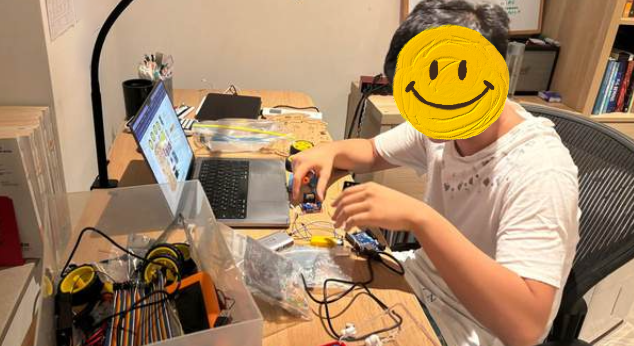
Designed and completed a lunar exploration mini-robot project (“Lunardock”)
-
Pioneer academic research paper shortlisted for peer-review stage
-
Participated in Watson Investment Competition and Hong Kong Young Physicists’ Tournament
-
Designed and executed localized market expansion strategy for rural family homestays in South Korea
-
Internship at the University of Hong Kong Space Research Laboratory
How Sunny Won a Coveted M&T Offer from the University of Pennsylvania
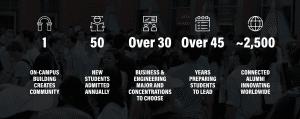
Among Foundation’s standout Early Decision results for Fall 2026, one offer shines especially bright: admission to Penn’s legendary M&T Dual Degree Program — a program that enrolls only 50–55 students worldwide each year, with an acceptance rate of around 3%.
Often called a “crown jewel” of undergraduate education in the U.S., M&T represents the very pinnacle of interdisciplinary excellence, jointly offered by the Wharton School and Penn Engineering.
What makes this story even more remarkable?
Sunny — the student who earned this rare offer — was rejected from the M&T summer program just one year earlier.
Today, his advisor, Gary Keung, Director of Overseas Admissions at Foundation Global Education, shares how persistence, strategy, and authentic growth transformed setbacks into success.
Why Is M&T Considered “The Crown on the Crown”?
Penn stands apart among Ivy League schools for its strong emphasis on real-world application. While some universities lean heavily toward theory or creativity, Penn looks for students who can turn knowledge into action.
The M&T Program embodies this philosophy perfectly.
With more than 40 years of history, M&T was designed to nurture future leaders at the intersection of technology and business — preparing students for careers in entrepreneurship, product innovation, and tech-driven industries.
Unlike standard admissions tracks, M&T has its own independent committee. Successful applicants must prove not just excellence in engineering and business, but a deep understanding of how these two fields reinforce each other.
In short, admissions officers are asking:
Do you truly understand why business + technology matters — and how you’ll use that combination to change the world?

From Broad Interests to a Focused Interdisciplinary Path
Sunny attends an international school in Hong Kong. After completing IGCSEs with top results and preparing to enter IB, he showed strong interest in math, physics, chemistry, and business — but without a clear direction.
We first met at the end of Grade 9, already late in the summer school cycle.
Instead of rushing applications, we made a strategic decision:
replace conventional summer programs with immersive academic exploration.
That summer, Sunny visited CERN in Switzerland and Heidelberg University, engaging directly with researchers. These conversations planted the seeds for his later passion in space science.
From early on, several traits stood out:
- Strong logical thinking in math and physics
- Fascination with origami and structural design (even space-related models)
- Natural business intuition, though unsure about major choice
Our strategy became clear:
Build on mathematics, develop applied physics as an academic core, and validate business interest through real-world practice.
Turning Rejection into Momentum
In Grade 10, Sunny joined the Pioneer Academics research program and participated in competitions such as the Wharton Investment Competition and Hong Kong Young Physicists’ Tournament.
He didn’t always win — but he always advanced.
Then came Grade 11.
He applied to both SSP (physics) and the M&T summer program.
Result: rejected from both.
Rather than pivoting away from his goals, we reassessed quickly.
Instead of waiting passively for formal pathways, Sunny proactively reached out — repeatedly — to the Space Research Laboratory at the University of Hong Kong, eventually securing a summer research position under a respected professor.
At the same time, he reconnected with scientists he had met in Switzerland. One retired aerospace expert began mentoring him online, and together they developed “Lunardock” — a conceptual lunar exploration robot.
Sunny built a project website, refined technical designs, and documented the development process.
This wasn’t a school assignment.
It was self-driven intellectual ownership.
Beyond the “STEM Kid” Stereotype
We also worked intentionally to broaden Sunny’s profile beyond academics.
During a summer in Korea, instead of simply visiting family, he helped his grandparents’ rural guesthouse address declining tourism. He designed a marketing plan, partnered with local craft shops, and increased visibility and bookings.
Gradually, Sunny evolved into something far more compelling:
Not just a high-achieving student — but an Opportunity Seeker.
Someone who:
- Spots real-world problems
- Integrates academic thinking with business logic
- Takes initiative
- Creates tangible impact
This multidimensional profile became central to his application.
Finding the Right Fit: Campus Visits, Summer Choices, and Essays
Campus Visits
During spring break of Grade 11, Sunny visited several universities.
He resonated deeply with Penn’s open, practical culture — but felt disconnected from the highly theoretical atmosphere at the University of Chicago.
That insight guided every decision afterward.
Summer Choices
Although accepted to UChicago’s summer program, we declined.
Instead, Sunny committed fully to his HKU space lab internship — adding authentic, third-party academic credibility.
Essays: Where Everything Clicked
We tested both Wharton and M&T essays.
Wharton felt forced.
M&T flowed naturally.
In just half a day, Sunny drafted an essay linking space economics and near-earth orbit development, seamlessly integrating business strategy with scientific vision.
That moment confirmed it:
M&T was his true academic home.
We applied Early Decision.
And the result speaks for itself.
Four Key Takeaways for Families
1. Summer Programs Are Optional — Depth Is Not
Sunny didn’t attend M&T summer school. Instead, he built deeper experiences locally and independently — which proved even more powerful.
2. Authenticity Wins
Top universities don’t want perfection — they want real people.
Sunny’s main essay evolved over many drafts, starting from his love of humor and landing on something deeper: using humor to connect people. That emotional honesty mattered.
3. Dual Degrees Require “1 + 1 > 2”
For programs like M&T, it’s not enough to be good at business and engineering. You must clearly explain why both together are essential for your future.
4. Planning Is Dynamic
From Grade 9 exploration, to Grade 11 rejections, to essay-driven clarity — every step required recalibration.
Success came from continuous adjustment, not rigid planning.
A Final Word from Gary
Every student carries unique potential.
My role is to be a long-term partner in growth — helping students uncover their strengths, shape their stories, and translate lived experiences into narratives universities truly value.
Elite admissions aren’t just about scores.
They’re about self-discovery, purposeful action, and authentic expression.
Sunny’s journey reminds us:
The path to top universities is not linear — but with the right guidance, even rejection can become a turning point.
To learn more about our U.S. university admissions services, feel free to connect with us.